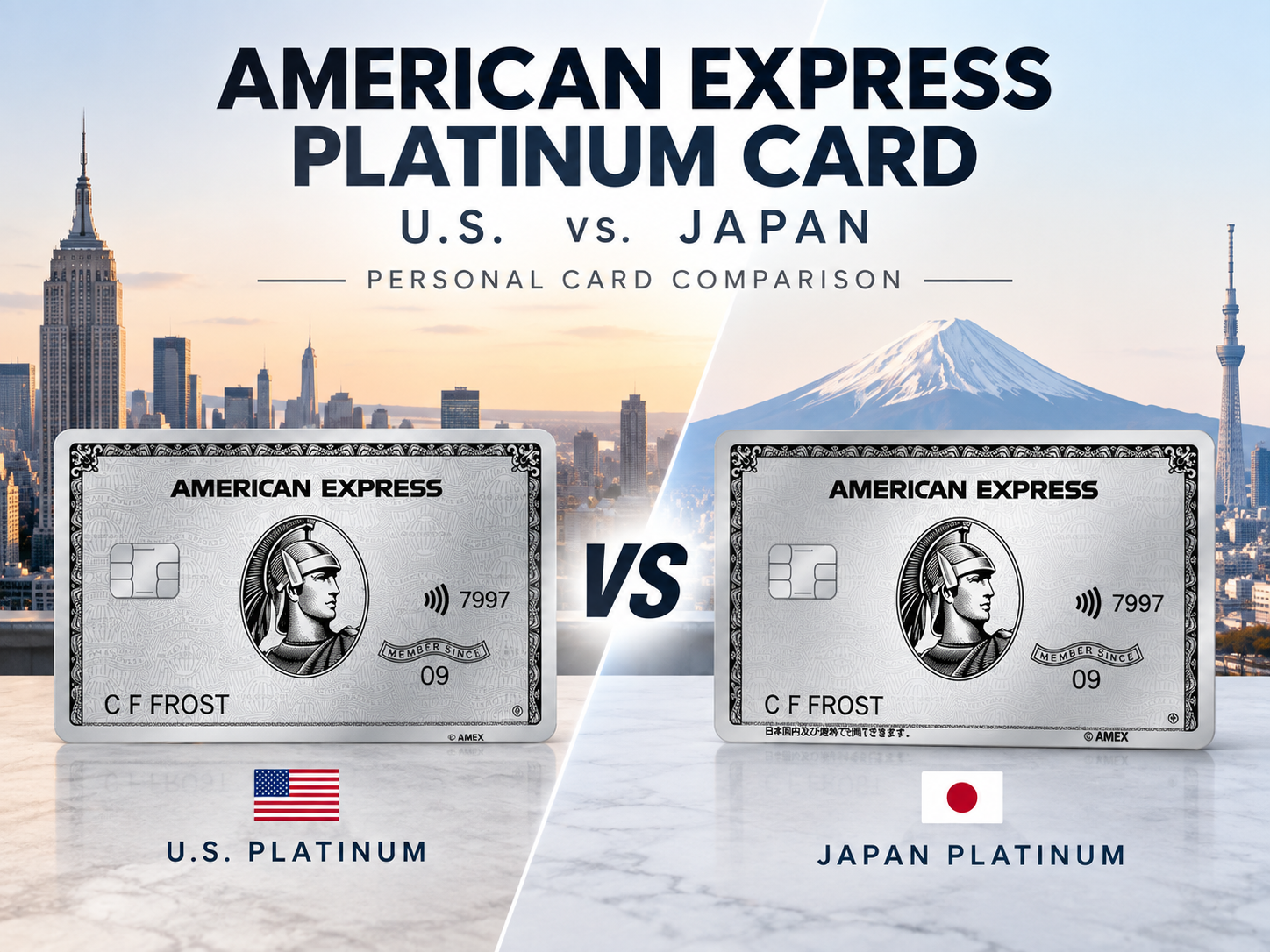

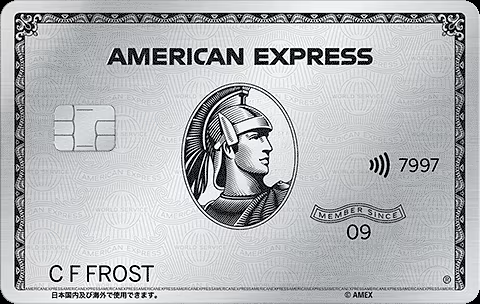
Living in Japan as an American creates an interesting credit card decision: should you keep the U.S. American Express Platinum Card, get the Japanese Platinum Card, or potentially hold both?
They share the same Platinum branding and many premium travel benefits, but the value propositions are surprisingly different.
The U.S. Platinum is built around statement credits, 5X Membership Rewards on eligible travel purchases, and no foreign transaction fees. The Japan Platinum is more compelling for high spenders and families, with Premium Free Stay Gifts, spending-based benefits, and up to four complimentary Family Cards.
This comparison focuses on long-term benefits rather than welcome offers or temporary promotions. I’ll also leave ANA, JAL, and Membership Rewards transfer-partner differences for a separate U.S. vs. Japan MR comparison.
U.S. vs. Japan Platinum: Key Differences
| Benefit | U.S. Platinum | Japan Platinum |
|---|---|---|
| Annual Fee | US$895 | ¥165,000 |
| Complimentary Additional Cards | Companion Platinum available | Up to 4 Family Cards |
| Full Platinum Additional Card | | First 4 Family Cards free |
| Base MR Earning | 1 MR / US$1 | 1 MR / ¥100 |
| Major MR Bonus | Up to 5X on eligible flights / Amex Travel | Up to 3X on eligible foreign-currency purchases |
| Foreign Transaction Fee | 0% | 3.5% |
| Priority Pass | Cardholder + 2 guests | Cardholder + 1 guest |
| Centurion Lounge | Cardholder; guests generally paid | Cardholder + 1 guest* |
| Fine Hotels + Resorts | ✓ | ✓ |
| Hilton Honors Gold | ✓ | ✓ |
| Marriott Bonvoy Gold Elite | ✓ | ✓ |
| Major Hotel Benefit | Up to US$600 Hotel Credit | 1–2 Premium Free Stay Gifts |
| Major Annual Credits | Extensive annual credits | Up to ¥100,000 Airline + ¥40,000 Dining |
| Best For | Credits + solo travelers | High spenders + families |
* Centurion Lounge guest policies can vary by location and applicable terms.
Earning Membership Rewards and Spending Abroad
For someone living between the U.S. and Japan, this is one of the most important differences.
| Category | U.S. Platinum | Japan Platinum |
|---|---|---|
| Base Spending | US$1 = 1 MR | ¥100 = 1 MR |
| Eligible Foreign-Currency Spending | US$1 = 1 MR | Up to ¥100 = 3 MR |
| Best Overseas Earning Rate | US$1 / MR | About ¥33.3 / MR |
| Foreign Transaction Fee | 0% | 3.5% |
| Major Travel Bonus | Up to 5X on eligible travel | — |
The U.S. Platinum isn’t a great everyday 1X card, but it is excellent for airfare. Eligible flights and certain Amex Travel bookings can earn as much as 5X Membership Rewards.
More importantly for an American living in Japan, the U.S. card has no foreign transaction fee. That makes it much easier to use internationally without sacrificing 3.5% of every purchase.
The Japan Platinum takes the opposite approach. Its standard earning rate is ¥100 = 1 MR, but eligible foreign-currency transactions can earn up to 3 MR per ¥100 after enrolling in the applicable program.
That’s an excellent earning rate, but you’re still paying a 3.5% foreign transaction fee.
So my basic rule is:
U.S. Platinum wins on the cost of spending abroad. Japan Platinum wins on the raw MR earning rate for eligible foreign-currency purchases.
I’ll cover ANA, JAL, airline and hotel transfer partners, transfer ratios, and annual transfer limits separately in my U.S. vs. Japan Membership Rewards comparison.
U.S. Platinum: The Credit Machine
The biggest reason I would keep a U.S. Platinum while living in Japan is the sheer amount of value available through annual credits.
| Major Credit | Maximum Annual Value |
|---|---|
| Hotel Credit | US$600 |
| Resy Credit | US$400 |
| Digital Entertainment Credit | US$300 |
| lululemon Credit | US$300 |
| Airline Fee Credit | US$200 |
| Uber Cash | US$200 |
| Uber One Credit | US$120 |
| Walmart+, CLEAR+, etc. | Additional value |
On paper, these credits easily exceed the cost of keeping the card.
But living in Japan also makes me value them more conservatively.
A US$200 Uber benefit isn’t worth US$200 to me if I have to change my normal spending habits just to use it. The same applies to Resy, lululemon, and other U.S.-focused benefits.
For someone who regularly returns to the U.S. and naturally uses FHR/THC hotels, Uber, Resy restaurants, and eligible entertainment services, however, the math can still be excellent.
If you naturally use enough of the credits, the effective cost of holding the U.S. Platinum can fall to zero—or even become negative.
That’s the fundamental appeal of the American card.
Japan Platinum: Much Better for High Spenders
The Japan Platinum is easier to understand because much of its value is concentrated in a few major benefits.
| Major Benefit | Maximum Value |
|---|---|
| Airline Credit | ¥100,000 |
| Global Dining Cashback | ¥40,000 |
| Premium Free Stay Gift | 1–2 nights |
You receive one Premium Free Stay Gift upon renewal.
The card becomes much more interesting if annual spending reaches ¥5 million. At that level, you can qualify for a ¥100,000 Airline Credit and a second Premium Free Stay Gift.
Add the maximum ¥40,000 Global Dining Cashback, and the two monetary credits alone can reach:
¥140,000
That’s before assigning any value to the free hotel nights.
For someone already spending ¥5 million a year on the card, the credits can cover most of the cost of keeping it. Once the Premium Free Stay Gifts are included, the total recurring value can realistically exceed the cost of holding the card.
This is why I view the Japan Platinum as a high-spender card rather than a coupon-book card.
The U.S. version gives you many smaller benefits to optimize. The Japanese version rewards you much more heavily once your spending reaches the right level.
Priority Pass vs. Centurion Lounge Access
Both cards provide access to the American Express Global Lounge Collection, but the guest policies are very different.
| Lounge Benefit | U.S. Platinum | Japan Platinum |
|---|---|---|
| Priority Pass Cardholder | Free | Free |
| Priority Pass Guests | Up to 2 free | 1 free |
| Centurion Lounge Cardholder | Free | Free |
| Centurion Lounge Guest | Generally paid | 1 free* |
| U.S. Centurion Spending Rule | US$75K unlocks up to 2 free guests | — |
| Better for Family Travel | Good | Excellent |
The U.S. Platinum actually has the advantage with Priority Pass, since the cardholder can bring up to two guests at no additional charge.
Centurion Lounges are a different story.
U.S. Platinum cardholders generally have to pay for guests unless they meet the US$75,000 annual eligible-spending requirement, which unlocks complimentary access for up to two guests.
The Japan Platinum is friendlier for traveling as a couple or family, with one complimentary guest under the applicable Centurion Lounge policy.
But the biggest difference isn’t actually the guest policy.
It’s the Family Cards.
Family Cards: Japan Has a Huge Advantage
This is probably the most underrated difference between the two versions.
The U.S. Platinum offers a complimentary Companion Platinum Card, but it shouldn’t be confused with a full Additional Platinum Card. If family members need the broader Platinum travel benefits, the paid Additional Platinum option becomes relevant.
Japan is dramatically simpler.
The Japan Platinum provides up to four complimentary Family Cards.
For a solo traveler, this might not matter much. But for a couple or a family that travels frequently, it can completely change the economics of the card.
Instead of evaluating the Japan Platinum as one premium card, I think it makes more sense to consider the value of the entire household.
For one person, the U.S. Platinum is easier to maximize. For a family, the Japan Platinum is much more compelling.
U.S. vs. Japan Platinum Rankings
| Category | 🥇 Winner | 🥈 Runner-Up |
|---|---|---|
| Solo Cardholder | U.S. | Japan |
| Family / Additional Cards | Japan | U.S. |
| Offsetting Cost With Credits | U.S. | Japan |
| High Annual Spending | Japan | U.S. |
| International Spending Cost | U.S. | Japan |
| Foreign-Currency MR Earning | Japan | U.S. |
| Airfare MR Earning | U.S. | Japan |
| Priority Pass Guests | U.S. | Japan |
| Centurion Lounge Family Use | Japan | U.S. |
| Free Hotel Nights | Japan | U.S. |
Conclusion
After living in Japan, I don’t really see the U.S. and Japan Platinum Cards as substitutes for each other anymore.
The U.S. Platinum is a credits card. If you can naturally use the Hotel, Resy, Uber, Digital Entertainment, and other credits, the effective cost can fall to zero or even become negative. The 5X earning opportunity on eligible travel and no foreign transaction fee also make it particularly attractive for frequent international travelers.
The Japan Platinum is a high-spender and family card. Once you reach ¥5 million in annual spending, the Airline Credit, Dining Cashback, and up to two Premium Free Stay Gifts can make the recurring value extremely compelling. Add up to four complimentary Family Cards, and Japan becomes the clear winner for household use.
If I were choosing purely for myself, I’d prefer the U.S. Platinum for credits, airfare, and international spending.
If I were choosing one Platinum Card for an entire family living in Japan, I’d take the Japan Platinum.
And for the right person living between both markets, there’s a reasonable argument that these two cards complement each other better than they compete with each other.