

If your main goal with a Delta credit card is airline status rather than simply earning SkyMiles, there’s one status worth focusing on:
Delta Gold Medallion = SkyTeam Elite Plus
Japan and the U.S. take very different approaches.
Japan: One Delta Gold Card provides a straightforward path to Gold Medallion.
U.S.: Delta Platinum and Reserve cards provide MQD Headstart, and holding multiple eligible cards can lower the remaining requirement for Gold.
The short version: Japan is easier with one card, while the U.S. offers more flexibility through a multi-card strategy.
SkyTeam Elite Plus Credit Cards: Japan vs. U.S. Delta Cards
| Country | Card | Annual Fee | Status Benefit | SkyTeam Elite Plus |
|---|---|---|---|---|
| 🇯🇵 | Delta SkyMiles American Express Card | ¥13,200 | Silver in the first year; spending requirement afterward | ❌ |
| 🇯🇵 | Delta SkyMiles American Express Gold Card | ¥28,600 | Gold in the first year; spending requirement afterward | ✅ |
| 🇺🇸 | Delta SkyMiles Platinum Card | US$350 | 2,500 MQD Headstart + US$20 spend = 1 MQD | After reaching Gold |
| 🇺🇸 | Delta SkyMiles Reserve Card | US$650 | 2,500 MQD Headstart + US$10 spend = 1 MQD | After reaching Gold |
| 🇺🇸 | Delta SkyMiles Platinum Business Card | US$350 | 2,500 MQD Headstart + US$20 spend = 1 MQD | After reaching Gold |
| 🇺🇸 | Delta SkyMiles Reserve Business Card | US$650 | 2,500 MQD Headstart + US$10 spend = 1 MQD | After reaching Gold |
Why Gold Medallion Is the Target
Delta status maps to SkyTeam status as follows:
Silver Medallion → SkyTeam Elite
Gold Medallion → SkyTeam Elite Plus
If your goal is alliance-wide status, Gold is where things become much more interesting.
SkyTeam Elite Plus can provide benefits such as alliance lounge access on eligible international itineraries, priority check-in, priority boarding, and priority baggage handling.
So the real question isn’t simply which Delta credit card is best.
It’s:
Which market offers the easiest path to Gold Medallion?
Japan Delta Gold: The Simplest Route to Elite Plus
The biggest selling point of the Delta SkyMiles American Express Gold Card(デルタ スカイマイル アメリカン・エキスプレス・ゴールド・カード) is simple:
Gold Medallion in the first year
After that, status is determined by spending:
| Annual Spend | Status |
|---|---|
| ¥1,500,000+ | Gold Medallion |
| ¥1,000,000–¥1,499,999 | Silver Medallion |
| Under ¥1,000,000 | No Medallion Status |
That creates a very straightforward path:
Delta Gold Card → Gold Medallion → SkyTeam Elite Plus
If ¥1.5 million in annual card spending is natural for you, Japan offers one of the simplest ways to maintain SkyTeam Elite Plus through a credit card.
🏆 Simplest Strategy: 🇯🇵 Japan Delta Gold
U.S. Delta Cards: More Cards, Less MQD Needed
U.S. Delta Platinum and Reserve cards work differently.
Instead of automatically granting Gold, each eligible card provides:
2,500 MQD Headstart
Gold Medallion requires 10,000 MQDs, so stacking eligible cards can dramatically reduce the remaining requirement.
| Eligible Cards Held | MQD Headstart | Remaining to Gold |
|---|---|---|
| 1 | 2,500 | 7,500 MQDs |
| 2 | 5,000 | 5,000 MQDs |
| 3 | 7,500 | 2,500 MQDs |
| 4 | 10,000 | 0 MQDs |
Card spending can also generate additional MQDs:
Platinum: US$20 spend → 1 MQD
Reserve: US$10 spend → 1 MQD
The U.S. strategy is therefore:
More eligible cards → more MQD Headstart → fewer MQDs needed from flying or spending.
Four U.S. Delta Cards Can Reach Gold — But It’s Not Very Practical
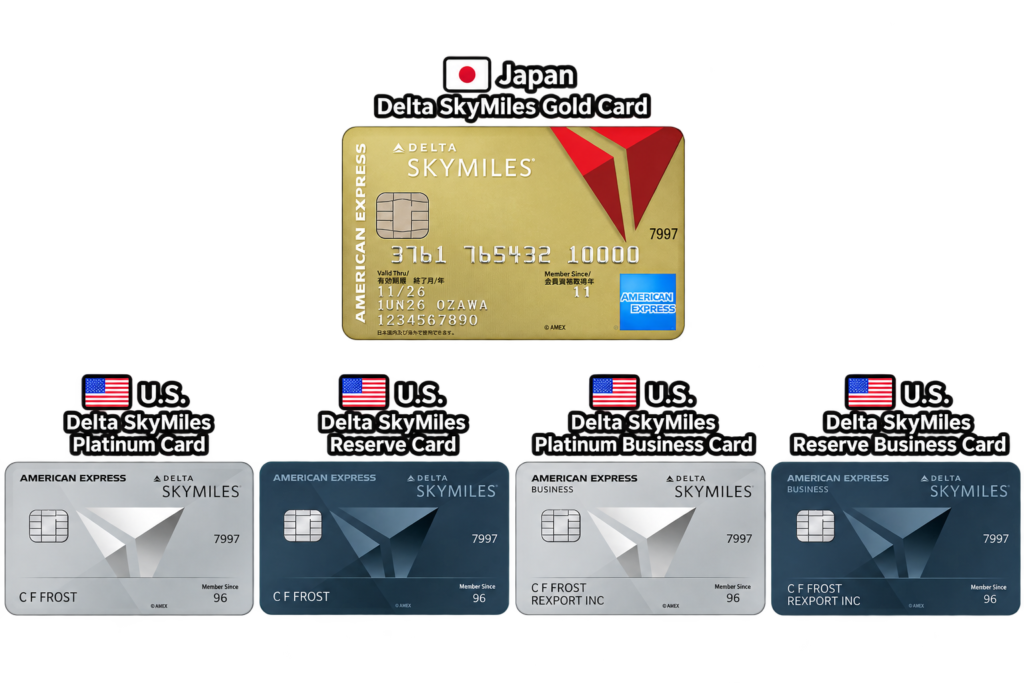
The four eligible cards are:
Delta SkyMiles Platinum Card
Delta SkyMiles Reserve Card
Delta SkyMiles Platinum Business Card
Delta SkyMiles Reserve Business Card
Each provides 2,500 MQDs:
2,500 × 4 = 10,000 MQDs
In theory, holding all four gets you enough MQD Headstart for Gold Medallion without needing additional MQDs from flying or card spending.
But this isn’t a particularly practical strategy for most people.
American Express generally limits cardholders to around five Amex credit cards, and these four Delta cards all count toward that limit.
Using four of those slots for Delta would leave only one slot available for other valuable Amex credit cards, particularly Hilton and Marriott co-branded cards.
Most people aren’t going to use four of their Amex credit card slots just to get SkyTeam Elite Plus.
For most U.S. cardholders, holding one or two Delta cards and combining their MQD Headstart with actual Delta flying is a much more realistic strategy.
Japan Delta Gold vs. U.S. Delta Cards
| 🇯🇵 Japan Delta Gold | 🇺🇸 U.S. Delta Cards | |
|---|---|---|
| Path to Gold | Gold in first year | Earn MQDs |
| Long-Term Requirement | ¥1.5M spend | 10,000 MQDs |
| Benefit of Each Additional Card | — | +2,500 MQDs |
| Multi-Card Strategy | Not needed | Yes |
| Four-Card Strategy | — | 10,000 MQD Headstart |
| Practical Strategy | One card | Usually 1–2 cards |
| Best For | Getting Elite Plus | Delta frequent flyers |
Bottom Line: Japan Is Simpler, U.S. Is Better for Delta Frequent Flyers
If your only goal is SkyTeam Elite Plus, the choice is straightforward:
🏆 🇯🇵 Japan Delta Gold is the simplest option.
You receive Gold Medallion in the first year and can maintain it through card spending afterward.
U.S. Delta cards become more interesting for travelers who already fly Delta. Each eligible Platinum or Reserve adds 2,500 MQDs, so holding one or two cards can significantly reduce how much additional flying or spending is required to reach Gold.
Although four U.S. Delta cards can theoretically provide enough MQD Headstart for Gold on their own, Amex credit card slots are limited, and most points-and-miles enthusiasts will want to leave room for Hilton and Marriott cards as well.
The practical difference can be summed up in one sentence:
Japan uses one Delta Gold Card to make SkyTeam Elite Plus simple; the U.S. uses one or two Delta cards to accelerate Gold Medallion for travelers already invested in Delta.