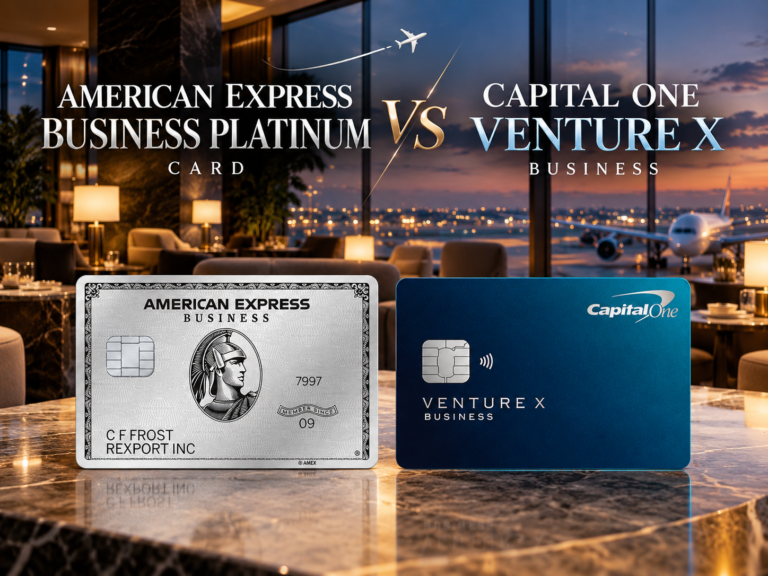
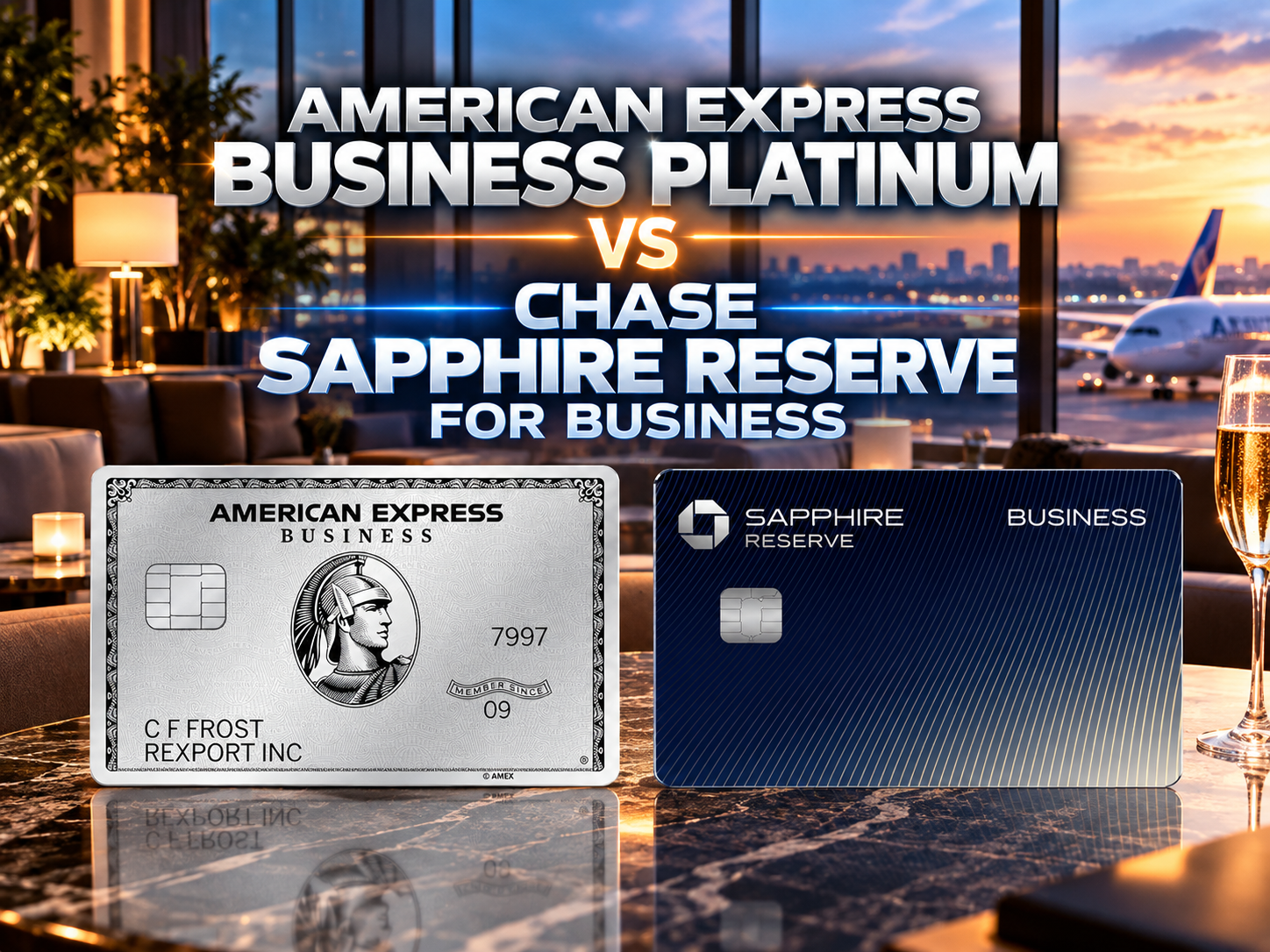

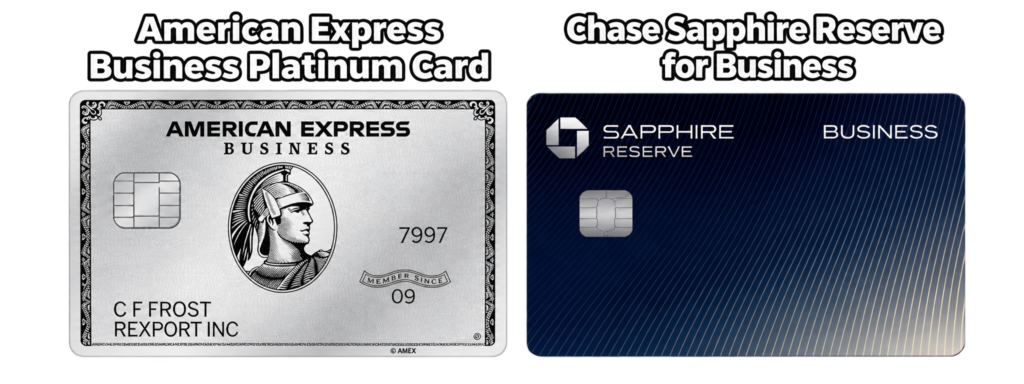
American Express Business Platinum Card and Sapphire Reserve for Business are both premium business travel cards, but they create value in very different ways.
The Business Platinum centers on Membership Rewards, Amex Travel, the Global Lounge Collection, Fine Hotels + Resorts, and a broad collection of business and travel credits. Sapphire Reserve for Business puts more emphasis on high earning rates for travel, Chase Travel, Sapphire Lounge access, The Edit, and the Ultimate Rewards ecosystem.
The key comparison is therefore Amex’s premium travel and business-credit ecosystem vs. Chase’s high-earning travel and Ultimate Rewards ecosystem.
👉 American Express Business Platinum Card Full Review
👉 Sapphire Reserve for Business Full Review
⭐ Amex Business Platinum vs Sapphire Reserve for Business: Full Comparison
| Feature | American Express Business Platinum Card | Sapphire Reserve for Business |
|---|---|---|
| Annual Fee | US$895 | US$795 |
| Points System | Membership Rewards | Ultimate Rewards |
| General Spending | 1X MR | 1X UR |
| Flights / Hotels | 5X on eligible flights and prepaid hotels through AmexTravel.com | 4X on flights and hotels booked directly |
| Travel Portal | 5X through Amex Travel | 8X through Chase Travel |
| Business Spending | 2X on eligible business categories and eligible purchases of $5,000+ | 3X on social media and search engine advertising |
| Major Annual Credits | Hotel, Airline Fee, CLEAR+, Dell, Adobe, Indeed, ChatGPT Business, Wireless, Hilton and others | Travel, The Edit, Google Workspace, ZipRecruiter, Giftcards.com, DoorDash and others |
| Points-Based Airfare Feature | 35% Airline Bonus | Points Boost |
| Lounge Access | Global Lounge Collection | Sapphire Lounge + Priority Pass + select Air Canada lounges |
| Premium Hotel Program | Fine Hotels + Resorts / The Hotel Collection | The Edit |
| Global Entry / TSA PreCheck | ✓ | ✓, with NEXUS also eligible |
| Transfer Partners | ✓ | ✓ |
| Employee Cards | Fees may apply depending on card type | No additional card fee |
| Foreign Transaction Fee | 0% | 0% |
💳 Earning Rewards: Large Business Purchases vs. Travel Spending
The biggest difference in earning structure is not simply 5X vs. 8X or 4X. It is where each card awards its strongest multipliers.
Business Platinum: Amex Travel and Large Business Purchases
Business Platinum concentrates its highest travel earning rates within Amex Travel. Eligible flights and prepaid hotels booked through AmexTravel.com earn 5X Membership Rewards.
Its business-spending structure works differently. Eligible purchases in select business categories and qualifying purchases of $5,000 or more can earn 2X MR.
That structure can cover expenses such as software and cloud services, electronic goods, shipping, and larger business purchases.
In practice, Business Platinum is built around:
Amex Travel + Large Business Purchases
rather than applying a broad bonus to virtually every type of travel expense.
Sapphire Reserve for Business: 8X Portal + 4X Direct Travel
Sapphire Reserve for Business takes a more travel-focused approach.
Purchases through Chase Travel earn 8X Ultimate Rewards, while flights and hotels booked directly earn 4X UR.
The direct-booking category creates an important practical difference. A business does not necessarily have to move its airfare and hotel reservations into a travel portal just to earn an elevated travel multiplier.
The card also earns 3X on eligible social media and search engine advertising, giving it another useful category for businesses with significant digital advertising expenses.
For businesses with heavy airfare and hotel spending, the two cards therefore encourage very different booking strategies.
💰 Credits and Annual Benefits
Both cards are credit-heavy premium business cards, but their credits target different types of expenses.
Business Platinum: Business Services + Travel Benefits
Business Platinum includes credits covering areas such as Dell, Adobe, Indeed, ChatGPT Business and U.S. wireless services, along with hotel, Hilton, airline fee, CLEAR+ and other travel-related benefits.
The important consideration is how naturally those credits fit into existing business expenses.
Many are subject to monthly, quarterly or semiannual periods, enrollment requirements, eligible merchants or other restrictions. A credit for a service the company already pays for can be relatively easy to use; a credit that creates a new expense simply to avoid losing it has much less practical value.
This makes the Business Platinum credit structure particularly relevant to businesses already spending on software, recruiting, technology, telecommunications and frequent travel.
Sapphire Reserve for Business: Travel + Business Services
Sapphire Reserve for Business takes a different approach, with benefits tied to travel, The Edit, Google Workspace, ZipRecruiter, Giftcards.com, DoorDash and other services.
Its travel credit is relatively straightforward, while The Edit benefits require eligible bookings through Chase’s premium hotel platform. Business-oriented credits such as Google Workspace and ZipRecruiter are much more dependent on a company’s existing operating expenses.
That means comparing the cards by simply adding the face value of every credit can be misleading.
The more useful question is whether the business naturally spends more with services such as:
Dell / Adobe / Indeed / ChatGPT Business
or:
Google Workspace / ZipRecruiter / Chase Travel
The answer can have a much larger effect on the practical cost of holding either card than the advertised total value of its credits.
✈️ Travel Benefits: Global Lounge Collection vs. Sapphire Lounge
Premium travel benefits are where these two cards compete most directly.
Airport Lounge Access
Business Platinum provides access to the American Express Global Lounge Collection, which includes Centurion Lounges, Priority Pass and other eligible partner lounges.
For travelers already familiar with the Amex Platinum ecosystem, Centurion Lounge access is one of the card’s most recognizable travel benefits.
Sapphire Reserve for Business instead centers its lounge strategy on Chase Sapphire Lounge by The Club, while also providing Priority Pass and eligible access to select Air Canada Maple Leaf Lounges and Air Canada Cafés.
Both cards therefore offer substantial airport lounge networks, but their usefulness can vary considerably depending on the airports and routes a business traveler uses most often.
One important distinction involves employee cards. Sapphire Reserve for Business employee cardmembers do not independently receive the primary cardmember’s major Sapphire Lounge and Priority Pass benefits.
FHR / THC vs. The Edit
Business Platinum uses Fine Hotels + Resorts and The Hotel Collection as the core of its premium hotel ecosystem.
Beyond the hotel credit, eligible FHR stays can include benefits such as breakfast, a property credit, room upgrades when available and late checkout. The Hotel Collection applies its own requirements, including a minimum stay.
Sapphire Reserve for Business uses The Edit as its corresponding premium hotel program.
Eligible The Edit stays can also provide benefits such as breakfast, property credits, room upgrades, early check-in and late checkout, with some benefits subject to availability.
For travelers who frequently stay at luxury hotels, this creates a much more useful comparison than simply looking at hotel-credit amounts:
Amex FHR / THC vs. Chase The Edit
The properties a business traveler actually uses may matter more than the headline value of either hotel benefit.
35% Airline Bonus vs. Points Boost
The cards also provide different ways to use points for travel without first transferring them to an airline program.
Business Platinum offers its 35% Airline Bonus when eligible cardmembers use Membership Rewards through Pay with Points for qualifying airfare booked through Amex Travel.
Sapphire Reserve for Business instead uses Chase’s Points Boost system. Eligible flights and hotels through Chase Travel can receive enhanced redemption value when a qualifying Points Boost offer is available.
The mechanisms are different, but they serve a similar strategic purpose:
another travel-redemption option beyond transfer partners.
🔄 Membership Rewards vs. Ultimate Rewards
For points-and-miles travelers, the comparison eventually comes down to the Membership Rewards and Ultimate Rewards ecosystems.
👉 American Express Membership Rewards Complete Guide
👉 Chase Ultimate Rewards Complete Guide
MR and UR share several important airline transfer partners, including programs such as Aeroplan, Flying Blue, British Airways, Singapore Airlines KrisFlyer and Virgin Atlantic Flying Club.
The more important differences come from distinctive transfer options.
Membership Rewards can transfer directly to ANA Mileage Club, giving MR a particularly useful route for certain ANA and Star Alliance award redemptions.
Ultimate Rewards can transfer directly to United MileagePlus and also has World of Hyatt as a major hotel transfer option.
That creates two very different potential redemption paths:
Business Platinum → MR → ANA Mileage Club
Sapphire Reserve for Business → UR → United MileagePlus / World of Hyatt
For award travelers, the programs they ultimately want to book through can matter more than the total number of transfer partners available in either ecosystem.
⚠️ Sapphire Reserve for Business: Upcoming Program Changes
Sapphire Reserve for Business has several announced changes that are relevant to a long-term comparison.
3X Advertising Cap
Beginning November 15, 2026, the 3X category for eligible social media and search engine advertising will apply to the first $1 million in qualifying purchases each account anniversary year, with purchases beyond that threshold earning the standard rate.
For businesses with unusually high advertising expenses, both the cap and the account-anniversary-year structure are therefore worth considering.
The Edit Credit
The Edit credit structure also has announced changes for future calendar years.
For that reason, businesses planning to hold Sapphire Reserve for Business over multiple years should evaluate The Edit under the terms applicable to the year in which the benefit is actually used, rather than assuming the 2026 structure will remain unchanged.
👤 Different Business Use Cases
Businesses That Book Directly With Airlines and Hotels
Sapphire Reserve for Business has a meaningful structural advantage for this spending pattern because direct flight and hotel bookings qualify for an elevated earning rate.
Businesses that prefer booking directly rather than routing reservations through a travel portal may therefore use the two cards very differently.
Frequent Premium Lounge Users
Both cards provide substantial lounge access, but through different networks.
Travelers who frequently use Centurion Lounges may interact with the Business Platinum ecosystem very differently from those whose regular airports have convenient Sapphire Lounges.
The most relevant comparison is therefore the lounge network at the airports the business actually uses.
Frequent Luxury Hotel Stays
Business Platinum provides FHR / THC, while Sapphire Reserve for Business provides The Edit.
For frequent luxury-hotel guests, property coverage, preferred hotel brands and the ability to naturally use each program’s hotel benefits can matter more than comparing headline credit amounts.
Businesses With Large Software and Procurement Expenses
Business Platinum’s eligible business categories and large-purchase earning structure cover expenses that are different from those of a typical premium travel card.
Businesses with substantial software, cloud, electronic goods or large procurement expenses may therefore find the earning structure relevant even outside travel.
Businesses With Heavy Travel Spending
If a large percentage of company expenses consists of airfare, hotels and Chase Travel bookings, Sapphire Reserve for Business concentrates more of its earning structure directly around travel.
The two cards are therefore not simply interchangeable premium business cards—they categorize and reward business spending differently.
Businesses That Need Multiple Employee Cards
Sapphire Reserve for Business allows employee cards without an additional card fee, making them useful for consolidating company expenses and earning UR across multiple employees.
However, those employee cardmembers do not independently receive the primary cardmember’s major lounge benefits.
Business Platinum uses a different employee and additional-card structure, with fees applying to certain premium additional-card options.
Businesses should therefore distinguish between two separate needs: giving employees cards for centralized spending and giving employees their own premium travel benefits.
🏁 Bottom Line
American Express Business Platinum Card and Sapphire Reserve for Business both target premium business travelers, but they build their value around different ecosystems.
Business Platinum centers on Membership Rewards, Amex Travel, the Global Lounge Collection, FHR / THC and business-service credits. Sapphire Reserve for Business places more emphasis on Ultimate Rewards, high-multiplier travel spending, Sapphire Lounge and The Edit.
The practical difference therefore comes down to how a business books flights and hotels, which airport lounges it actually uses, where its operating expenses are concentrated, and which airline and hotel programs it ultimately wants to access with MR or UR.