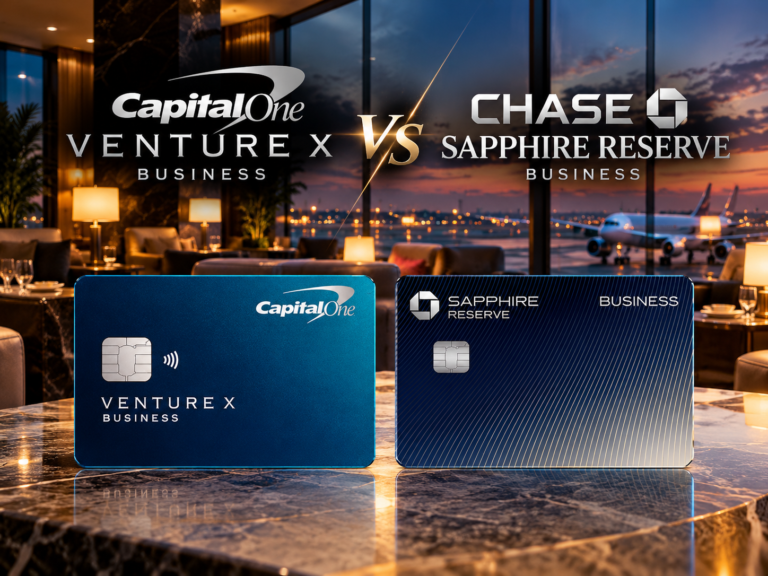
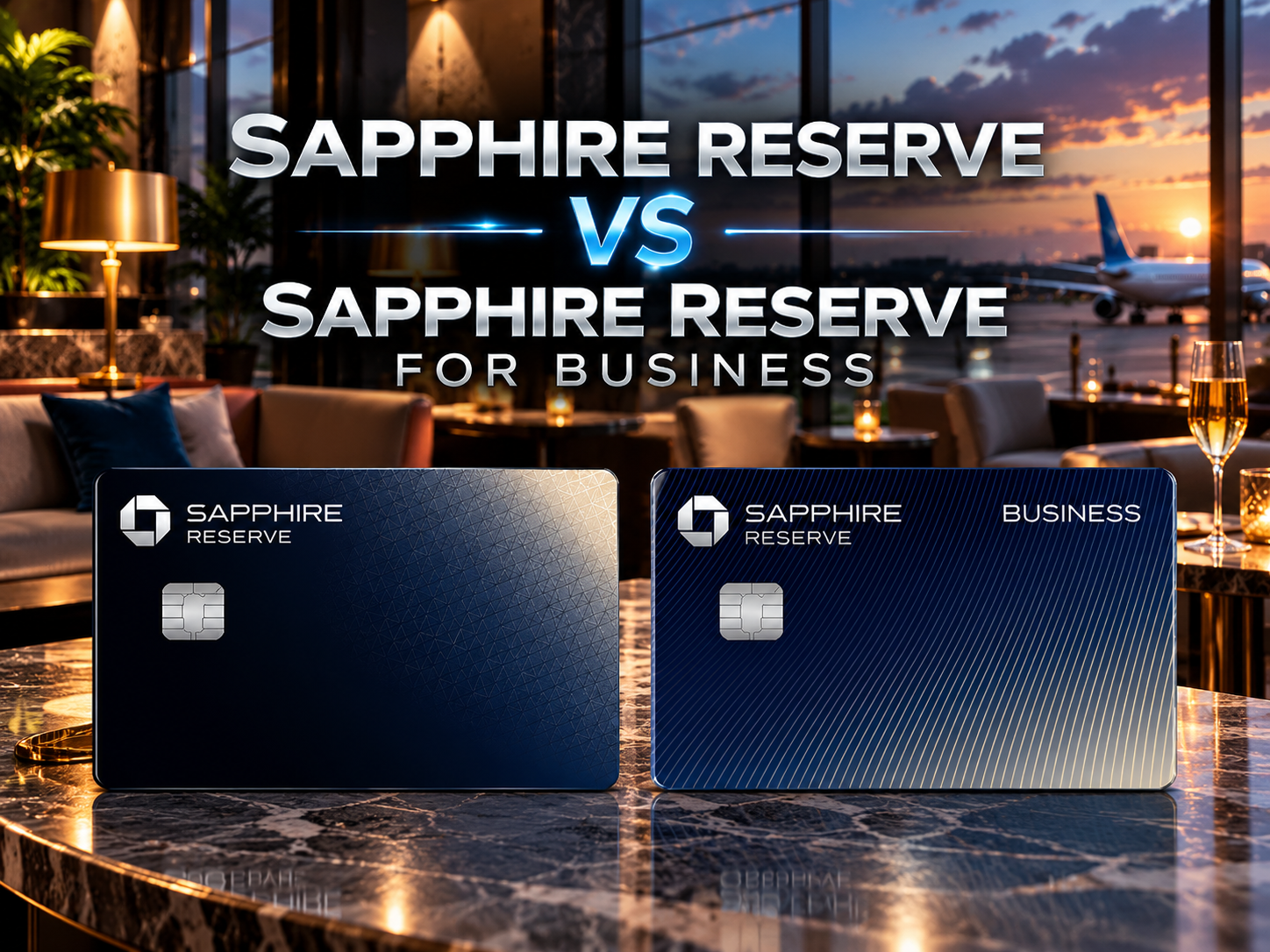

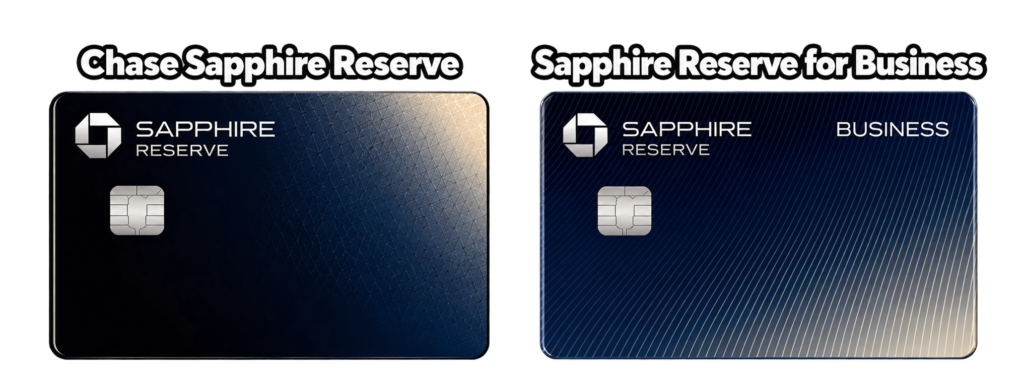
Chase Sapphire Reserve and Sapphire Reserve for Business are Chase’s premium personal and business travel cards within the Ultimate Rewards ecosystem.
Their core travel benefits are remarkably similar: 8X through Chase Travel, 4X on flights and hotels booked directly, an annual travel credit, The Edit, Sapphire Lounge access, Priority Pass, and the same Ultimate Rewards transfer-partner ecosystem.
The biggest differences appear outside travel. Sapphire Reserve emphasizes personal travel, dining, and lifestyle benefits, while Sapphire Reserve for Business focuses more heavily on business travel, digital advertising, employee cards, and business-service credits.
👉 Chase Sapphire Reserve Full Review
👉 Sapphire Reserve for Business Full Review
⭐ Sapphire Reserve vs Sapphire Reserve for Business: Full Comparison
| Feature | Chase Sapphire Reserve | Sapphire Reserve for Business |
|---|---|---|
| Annual Fee | $795 | $795 |
| Points Program | Chase Ultimate Rewards | Chase Ultimate Rewards |
| General Spending | 1X UR | 1X UR |
| Chase Travel | 8X UR | 8X UR |
| Flights Booked Directly | 4X UR | 4X UR |
| Hotels Booked Directly | 4X UR | 4X UR |
| Dining | 3X UR worldwide | 1X UR |
| Advertising | 1X UR | 3X on eligible social media and search engine advertising |
| Annual Travel Credit | Up to $300 | Up to $300 |
| The Edit Credit | Up to $500 per year | Up to $500 per year |
| Other Major Credits | Dining, StubHub / viagogo, Lyft, Peloton and more | Google Workspace, ZipRecruiter, Giftcards.com, Lyft and more |
| Sapphire Lounge | ✓ + up to 2 guests | ✓ + up to 2 guests |
| Priority Pass | ✓ | ✓ |
| Air Canada Lounge Access | Select Maple Leaf Lounges / Cafés | Select Maple Leaf Lounges / Cafés |
| Global Entry / TSA PreCheck / NEXUS | Up to $120 | Up to $120 |
| Authorized User / Employee Cards | $195 each | No additional fee |
| Card Structure | Traditional revolving credit card | Pay in Full + Flex for Business on eligible purchases |
| Foreign Transaction Fee | 0% | 0% |
💳 Earning Rewards: Dining vs Advertising
Travel earning is nearly identical between the two cards.
Both earn 8X Ultimate Rewards through Chase Travel and 4X on flights and hotels booked directly with the airline or hotel.
The meaningful difference is what happens outside travel.
Sapphire Reserve: 3X on Dining Worldwide
Sapphire Reserve earns 3X Ultimate Rewards on dining worldwide.
This makes dining a natural extension of the card’s travel-focused earning structure, especially for cardholders who frequently spend at restaurants both at home and while traveling.
The 3X category does not require booking through Chase Travel or using a specific restaurant platform.
The basic earning strategy is therefore straightforward:
Travel + Dining → Sapphire Reserve
Sapphire Reserve for Business: 3X on Advertising
Sapphire Reserve for Business shifts its 3X category toward eligible social media and search engine advertising.
That makes its earning structure more closely aligned with businesses that spend heavily on digital customer acquisition.
Instead of rewarding restaurants, the Business version is designed around:
Travel + Digital Advertising → Sapphire Reserve for Business
For companies with substantial eligible Google, Meta, or other qualifying search and social advertising expenses, this can create a very different Ultimate Rewards earning profile from the personal card.
💰 Credits and Annual Benefits
Both cards include an annual travel credit and benefits tied to The Edit, so much of their core travel-credit structure overlaps.
The differences become more apparent when looking at their other credits.
Sapphire Reserve: Personal Travel and Lifestyle
The personal Sapphire Reserve includes benefits aimed primarily at individual cardholders, including credits or perks related to dining, StubHub / viagogo, Lyft, Peloton, and other lifestyle services.
These benefits do not all work the same way. Some have specific merchants, enrollment requirements, or usage periods.
For that reason, adding the face value of every available credit does not necessarily represent the amount a cardholder will actually save.
Their practical value depends on whether those services were already part of the cardholder’s normal spending.
Sapphire Reserve for Business: Business Operations
The Business version shifts more of its credits toward operating expenses.
Benefits involving Google Workspace, ZipRecruiter, and Giftcards.com can correspond directly to expenses that a business may already have.
That creates a clear distinction between the two cards:
Sapphire Reserve → Travel + Dining + Lifestyle
Sapphire Reserve for Business → Travel + Business Services
A business that already pays for eligible software or recruiting services may use these credits very differently from an individual cardholder.
✈️ Travel Benefits: Very Similar Premium Travel Cards
The personal and business Sapphire Reserve cards share much of the same premium travel framework.
Chase Travel vs Direct Booking
Both cards earn 8X through Chase Travel while also earning 4X when flights and hotels are booked directly.
That flexibility matters because cardholders do not have to route every travel purchase through a portal simply to earn an elevated rewards rate.
For example, travelers who prefer dealing directly with an airline for schedule changes or want a hotel reservation connected directly with the hotel can still earn elevated rewards through direct booking.
As a result, the travel-earning strategy is very similar between the personal and business versions.
Airport Lounge Access
Both primary cardholders receive access to Chase Sapphire Lounge by The Club, with access for up to two accompanying guests under the applicable terms.
Both cards also include Priority Pass and access to eligible Air Canada Maple Leaf Lounges and Air Canada Cafés.
For the primary cardholder, the lounge networks are therefore very similar.
The more important distinction appears with authorized users and employee cards.
Sapphire Reserve charges an additional fee for authorized users, while Sapphire Reserve for Business allows employee cards without an additional card fee.
However, a free employee card does not automatically mean that the employee receives the same Sapphire Lounge or Priority Pass privileges as the primary cardholder. Businesses that want lounge access for multiple employees should evaluate the current employee-card lounge rules separately.
The Edit
Both cards provide access to The Edit by Chase Travel, Chase’s premium hotel program.
Eligible The Edit stays can include benefits such as breakfast, a property credit, and potentially room upgrades, early check-in, and late checkout when available.
Because The Edit is available on both cards, it does not create a major distinction between the personal and business versions.
🔄 Ultimate Rewards: The Same Transfer Partner Ecosystem
Both cards earn Chase Ultimate Rewards.
👉 Chase Ultimate Rewards Complete Guide
Unlike a Chase vs Amex or Chase vs Capital One comparison, there are no competing points ecosystems to evaluate here.
Ultimate Rewards earned with either card can be transferred according to Chase’s current transfer-partner rules to programs such as United MileagePlus, Air Canada Aeroplan, Air France-KLM Flying Blue, British Airways Club, Singapore Airlines KrisFlyer, and World of Hyatt.
In other words:
UR earned with Sapphire Reserve
and
UR earned with Sapphire Reserve for Business
ultimately feed into the same airline-mile and hotel-point strategy.
Both cards also participate in Chase Travel’s Points Boost structure.
The real difference is therefore not what you can do with the points after earning them. It is whether those Ultimate Rewards are being generated primarily from personal travel and dining or from business travel and advertising expenses.
⚠️ Business Advertising and Payment Rules
Sapphire Reserve for Business has a few structural rules that differ significantly from the personal card.
Advertising 3X Cap
Eligible social media and search engine advertising earns 3X Ultimate Rewards.
Beginning November 15, 2026, the 3X rate applies to the first $1,000,000 in eligible advertising purchases per account anniversary year, with spending above that threshold earning the standard rate.
This distinction is particularly relevant for companies with very large annual digital advertising budgets.
Pay in Full + Flex for Business
The personal Sapphire Reserve operates as a traditional revolving credit card, allowing balances to be carried subject to the card’s terms and applicable interest charges.
Sapphire Reserve for Business uses a Pay in Full structure, meaning the balance is generally expected to be paid in full.
Chase also offers Flex for Business, which allows eligible purchases to be paid over time under applicable terms.
So despite sharing the Sapphire Reserve name and many of the same travel benefits, the underlying account structures are not identical.
👤 Different Use Cases
Personal Travel and Dining Are Major Expenses
Sapphire Reserve combines premium travel earning with 3X dining worldwide.
For someone whose major expenses include personal airfare, hotels, and restaurants, those categories fit naturally within the personal card’s rewards structure.
The Business Spends Heavily on Travel and Advertising
Sapphire Reserve for Business retains much of the personal card’s travel earning structure while replacing dining as a major differentiator with eligible digital advertising.
A company spending heavily on flights, hotels, social media advertising, and search advertising can therefore consolidate several large business-expense categories within the same Ultimate Rewards account.
Multiple Employee Cards Are Needed
Sapphire Reserve for Business allows employee cards without an additional card fee.
This can make it easier to place company expenses from multiple employees under one business account rather than adding paid authorized users to a personal Sapphire Reserve.
Lounge eligibility should still be evaluated separately if airport lounge access for employees is part of the strategy.
The Business Uses Software and Recruiting Services
Business-oriented credits such as those involving Google Workspace and ZipRecruiter can align with recurring operating expenses.
The personal Sapphire Reserve, by contrast, directs more of its additional benefits toward dining, entertainment, transportation, and lifestyle spending.
Both Personal and Business Spending Are Significant
The two cards do not necessarily have to serve as substitutes for each other.
Sapphire Reserve can handle personal travel and dining, while Sapphire Reserve for Business can separate business travel, advertising, and other company expenses.
Because both earn Ultimate Rewards, separating personal and business accounting does not require maintaining two completely different points strategies.
🏁 Bottom Line
Chase Sapphire Reserve and Sapphire Reserve for Business share a remarkably similar premium travel foundation. Both center on Chase Travel, elevated rewards for direct travel bookings, Sapphire Lounge access, The Edit, and the Ultimate Rewards ecosystem.
The distinction becomes much clearer outside travel. Sapphire Reserve is structured around personal travel, dining, and lifestyle spending, while Sapphire Reserve for Business extends the Sapphire Reserve framework to business travel, digital advertising, employee spending, and business services.
The key difference is therefore not the Ultimate Rewards transfer partners available after the points are earned. It is whether the Sapphire Reserve ecosystem is being used primarily for personal expenses or business expenses.