Three Major Airline Alliances Compared
The three major global airline alliances — Star Alliance, SkyTeam, and oneworld — connect airlines around the world through shared networks, frequent flyer partnerships, and elite-status benefits.
At first glance, their elite benefits can look very similar. Priority check-in, priority boarding, extra baggage, and lounge access are common across all three alliances.
For miles and points travelers, however, the more important question is not simply which alliance offers the best benefits.
What really matters is:
Which airlines you fly, where you want to go, and which mileage programs can book the same award flight.
This guide compares Star Alliance, SkyTeam, and oneworld from a practical miles-and-points perspective.
How Are the Three Major Airline Alliances Different?
The basic idea behind all three alliances is similar, but their member airlines, elite-status structures, and mileage ecosystems are different.
| Airline Alliance | Major Airlines | Alliance Status | Top Status |
|---|---|---|---|
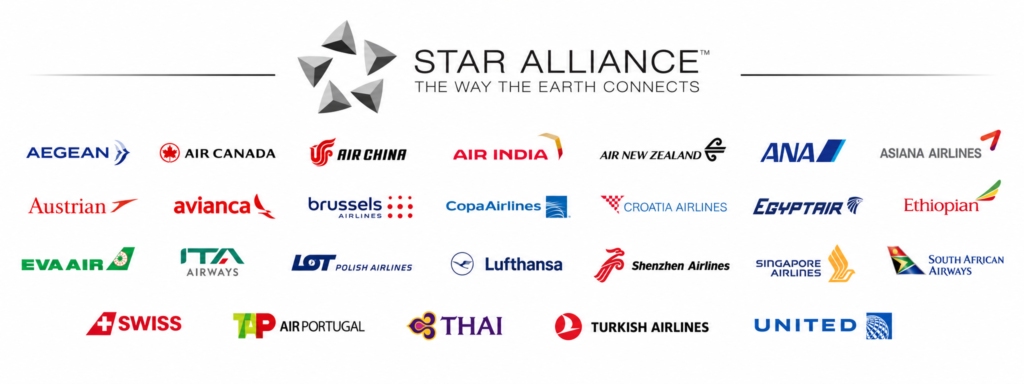
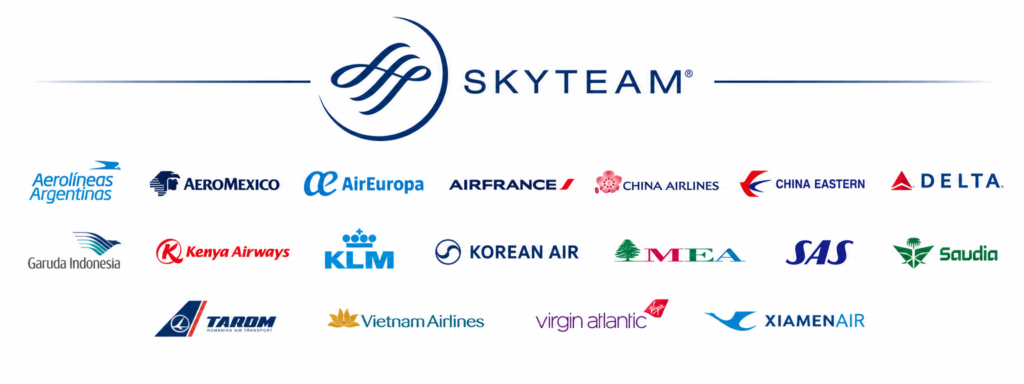
| Star Alliance | ANA, United, Air Canada, Singapore Airlines, EVA Air | Silver / Gold | Gold |
| SkyTeam | Delta, Air France, KLM, Korean Air, China Airlines | Elite / Elite Plus | Elite Plus |
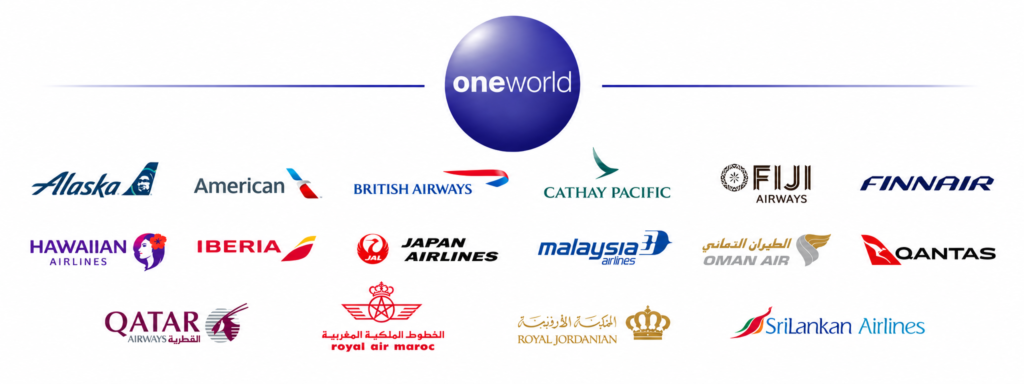
| oneworld | American Airlines, Alaska Airlines, JAL, Cathay Pacific, Qatar Airways | Ruby / Sapphire / Emerald | Emerald |
Star Alliance has a simple two-tier structure: Silver and Gold. SkyTeam similarly uses Elite and Elite Plus, while oneworld has three levels: Ruby, Sapphire, and Emerald.
Because of these differences, the top alliance status levels are not perfectly equivalent.
Elite Status Benefits Compared
If we compare the most useful upper-tier alliance statuses, many of their airport benefits are quite similar.
| Benefit | Star Alliance Gold | SkyTeam Elite Plus | oneworld Sapphire | oneworld Emerald |
|---|---|---|---|---|
| Priority Check-in | ✓ | ✓ | ✓ | ✓ |
| Priority Boarding | ✓ | ✓ | ✓ | ✓ |
| Extra Baggage | ✓ | ✓ | ✓ | ✓ |
| Priority Baggage | ✓ | ✓ | ✓ | ✓ |
| Lounge Access | ✓ | ✓ | Business Lounge | First + Business Lounge |
| Priority Waitlist | ✓ | ✓ | ✓ | ✓ |
| Fast Track / Priority Lane | Select Airports | SkyPriority / Airport Dependent | — | Select Airports |
Star Alliance Gold provides a broad set of airport benefits, including priority check-in, boarding, baggage handling, extra baggage allowance, and access to eligible alliance lounges.
SkyTeam Elite Plus adds lounge access and priority baggage handling to the benefits available through SkyTeam Elite, while SkyPriority integrates several priority airport services.
oneworld has a more distinctive lounge hierarchy. Sapphire generally provides access to eligible Business Class lounges, while Emerald can also provide access to eligible First Class lounges.
For most standard airport priority benefits, the three alliances are therefore more similar than different.
oneworld Emerald is where the differences become more noticeable.
How to Earn Airline Alliance Elite Status
Star Alliance, SkyTeam, and oneworld do not directly issue frequent flyer status.
Instead, you first earn elite status with one of their member airlines. That airline status then maps to the corresponding alliance status.
| Airline Alliance | Alliance Status | How You Get It |
|---|---|---|
| Star Alliance | Silver / Gold | Earn a qualifying elite tier with a Star Alliance member airline |
| SkyTeam | Elite / Elite Plus | Earn a qualifying elite tier with a SkyTeam member airline |
| oneworld | Ruby / Sapphire / Emerald | Earn a qualifying elite tier with a oneworld member airline |
For example, earning Star Alliance Gold does not necessarily mean you need elite status with ANA or EVA Air.
Different Star Alliance airlines have their own frequent flyer programs and qualification requirements. If your airline status maps to Star Alliance Gold, you can receive the corresponding alliance benefits when traveling on eligible Star Alliance flights.
The same principle applies to SkyTeam Elite Plus and oneworld Sapphire or Emerald.
Qualification systems vary considerably between airlines. Depending on the program, elite status may be earned through flying, credit-card spending, credit-card benefits, status matches, status challenges, or special promotions.
If you would rather not rely entirely on flying, I have also compared credit cards that can provide airline elite status directly or help you qualify through spending:
👉 Best Credit Cards for Airline Elite Status
A better way to think about elite status is therefore:
Choose the alliance status you want → Find airline programs that map to that status → Compare qualification and requalification requirements → Choose the method that works for you
How Does Lounge Access Differ?
All three alliances can provide cross-airline lounge access to eligible elite members, but the rules are not identical.
Star Alliance Gold
One of the most recognizable benefits of Star Alliance Gold is access to eligible lounges when traveling on qualifying Star Alliance flights.
Eligible members can generally also bring one qualifying guest.
This means your elite status can come from one Star Alliance airline while still providing alliance benefits when you fly another member airline.
SkyTeam Elite Plus
SkyTeam Elite Plus can provide lounge access on qualifying international itineraries regardless of cabin class, generally with one eligible guest.
SkyTeam lounge rules include requirements related to international travel, same-day flights, and individual frequent flyer programs, so eligibility should always be checked for a specific itinerary.
oneworld Sapphire / Emerald
oneworld has the clearest lounge distinction between elite tiers.
oneworld Sapphire:
Primarily provides access to eligible Business Class lounges.
oneworld Emerald:
Can provide access to eligible First Class lounges in addition to Business Class lounges.
That means an Emerald member may be able to enjoy a very high level of airport lounge access even when flying Economy Class.
Individual airlines and specific lounges may have exceptions, so actual access always depends on the applicable airline and lounge rules.
Airline Alliances for Travelers in Japan
For travelers based in Japan, the distinction is especially easy to understand.
| Major Japanese Airline | Airline Alliance |
|---|---|
| ANA | Star Alliance |
| JAL | oneworld |
Frequent ANA flyers will naturally interact more often with Star Alliance, while JAL flyers will encounter oneworld more frequently.
But award travel is not quite that simple.
An ANA flight does not necessarily have to be booked with ANA Mileage Club miles. Other Star Alliance frequent flyer programs may also have access to the same award flight.
The same concept applies to JAL and its partners.
So “I fly ANA, therefore I should only collect ANA miles” or “I fly JAL, therefore I should only collect JAL miles” is not always the best approach.
The U.S. Market Has All Three Alliances
The U.S. market provides an especially clear example because all three alliances have major U.S. airlines.
| Major U.S. Airline | Airline Alliance |
|---|---|
| United Airlines | Star Alliance |
| Delta Air Lines | SkyTeam |
| American Airlines | oneworld |
| Alaska Airlines | oneworld |
This makes all three alliances relevant if you use U.S. credit cards and airline miles.
The U.S. points ecosystem also includes transferable currencies such as American Express Membership Rewards, Chase Ultimate Rewards, Citi ThankYou Points, and Capital One Miles, which can transfer to multiple airline programs.
That is one reason miles-and-points travelers do not need to remain loyal to only one airline or alliance.
Mileage Programs Matter More Than the Alliance
This is one of the most important concepts to understand about airline alliances:
An airline alliance is not a mileage program.
There is no universal currency called “Star Alliance Miles.” The same is true for SkyTeam and oneworld.
You actually earn and redeem miles through individual frequent flyer programs.
For example:
| Airline Alliance | Mileage Programs Worth Knowing |
|---|---|
| Star Alliance | Aeroplan, MileagePlus, ANA Mileage Club, LifeMiles, KrisFlyer |
| SkyTeam | Flying Blue, SkyMiles, Flying Club, SKYPASS |
| oneworld | AAdvantage, Atmos Rewards, Asia Miles, Avios, JAL Mileage Bank |
The alliance creates the partnership network that can make award travel across different member airlines possible.
If you want to fly a particular Star Alliance airline, for example, you may not have to use that airline's own mileage currency.
The same flight might be available through several partner programs, each with different mileage requirements, taxes and fees, transfer partners, and award availability rules.
That is where airline miles become much more interesting.
The Same Flight May Be Bookable With Different Miles
Suppose you find an award seat on an alliance airline.
The first question should not necessarily be:
“Which airline's miles should I collect?”
A better question is:
“Which mileage programs can book this flight?”
Then compare:
Miles required → Taxes and fees → Award availability → Transferable points that can access the program
Only after that should you decide which miles to use.
Two travelers can therefore sit on exactly the same flight while having booked their tickets with completely different mileage currencies.
This is also why transferable credit-card points are so useful.
Which Airline Alliance Should You Choose?
For a casual traveler, starting with the airline you fly most often makes sense.
| Travel Pattern | Start With |
|---|---|
| Frequently fly ANA / United / Air Canada / Singapore Airlines | Star Alliance |
| Frequently fly Delta / Air France / KLM / Korean Air | SkyTeam |
| Frequently fly JAL / American / Alaska / Cathay Pacific / Qatar Airways | oneworld |
| Value First Class lounge privileges from alliance status | oneworld Emerald |
| Primarily interested in award travel | Learn all three alliances |
But once you start using transferable points and airline miles, there is little reason to restrict yourself to one alliance.
What usually matters more is:
Route, award availability, mileage price, taxes and fees, and transfer options.
Complete Guides to the Three Airline Alliances
For a deeper look at each alliance's member airlines, elite status, lounge access, and mileage programs, see:
These three guides explain how each alliance works. From there, you can go deeper into individual frequent flyer programs and specific award-redemption strategies.
Conclusion: Choose the Flight First, Not the Alliance
The elite benefits offered by the three major airline alliances have a lot in common.
Star Alliance Gold, SkyTeam Elite Plus, and oneworld Sapphire all provide substantial airport priority benefits, while oneworld Emerald stands out for additional privileges such as eligible First Class lounge access.
But for miles-and-points travelers, that is only part of the picture.
A more practical approach is:
Destination → Best Flight → Mileage Programs That Can Book It → Miles and Fees Required → Transfer Credit Card Points → Book the Award
Once you start planning award travel this way, you no longer need to decide whether you are a “Star Alliance person,” a “SkyTeam person,” or a “oneworld person.”
The three alliances are tools. The real comparison happens with each award you book.