

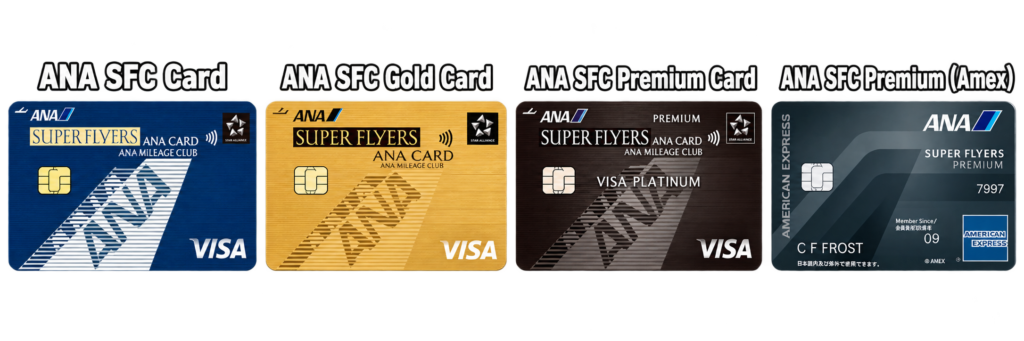
ANA Super Flyers Card (SFC) is one of Japan’s most distinctive airline elite-status programs. Unlike most airline status programs, SFC allows eligible travelers to retain valuable Star Alliance benefits through a Japanese credit card after their original ANA elite status expires.
For Americans living in Japan, this can be particularly attractive. Whether you frequently fly ANA between Tokyo and the United States, travel around Asia, or use United Airlines and other Star Alliance carriers, SFC can provide benefits beyond ANA itself.
Important: SFC is a Japanese-issued credit card. Applicants need a Japanese address, an account with a financial institution in Japan, and approval from the card issuer. Being an American citizen does not disqualify you, but holding ANA Platinum status alone does not guarantee card approval.
ANA has also announced a major change beginning in April 2028. The new SFC PLUS and SFC LITE tiers will make annual spending on eligible Japanese ANA Cards and ANA Pay an important factor in maintaining Star Alliance Gold benefits.
This guide covers SFC eligibility, the 50,000 Premium Points (PP) qualification process, Tokyo–Okinawa mileage runs, estimated qualification costs, Japanese ANA credit cards, and the 2028 changes.
⭐ ANA Super Flyers Card: Key Rules
| Category | Details |
|---|---|
| Program | ANA Super Flyers Card (SFC) |
| Card issuer country | Japan |
| Application requirements | Japanese address, Japanese financial institution account, issuer approval |
| Standard qualification | ANA Platinum or Diamond |
| Alternative qualification | 1 million Lifetime Miles on ANA Group-operated flights |
| Traditional qualification target | 50,000 Premium Points |
| Minimum ANA Group PP | 25,000 |
| Alternative qualification | Life Solution Services |
| Current core benefit | Star Alliance Gold |
| 2028 program | SFC PLUS / SFC LITE |
| SFC PLUS spending requirement | ¥3,000,000 annually |
| SFC PLUS alliance status | Star Alliance Gold |
| SFC LITE alliance status | Star Alliance Silver |
| New system effective | April 1, 2028 |
The key distinction is that SFC is a credit-card-based membership, not simply an ANA elite-status tier.
You first qualify through ANA, then apply for an eligible Japanese SFC credit card.
✈️ Why ANA SFC Matters for Americans Living in Japan
For travelers based in Japan, the most compelling SFC benefit has traditionally been long-term access to Star Alliance Gold privileges.
| Benefit | Practical value |
|---|---|
| Star Alliance lounge access | Access eligible lounges when flying qualifying Star Alliance itineraries |
| Priority check-in | Use designated premium check-in counters |
| Priority boarding | Board earlier when offered by the operating airline |
| Additional baggage allowance | Extra checked baggage under applicable airline rules |
| Priority baggage handling | Priority tags on eligible itineraries |
| Priority waitlisting | Higher priority under participating airline rules |
SFC Is Not Just for ANA Flights
Star Alliance Gold benefits extend across participating carriers, including:
- ANA
- United Airlines
- EVA Air
- Singapore Airlines
- Air Canada
- Lufthansa
For example, an American living in Tokyo who regularly travels to the United States on United Airlines may benefit from Star Alliance Gold even when not flying ANA.
Likewise, travelers using EVA Air through Taipei or Singapore Airlines through Singapore may find the alliance-wide benefits useful.
However, lounge access and other privileges always depend on the operating airline, itinerary, and applicable Star Alliance rules.
SFC Family Cards: Star Alliance Gold Without a Separate Mileage Run
One of the most valuable ANA Super Flyers Card benefits is the ability to extend SFC membership to eligible family members without requiring each person to earn 50,000 Premium Points.
The primary SFC cardholder can apply for family cards for eligible spouses, parents, and children aged 18 or older. Family members do not need to independently qualify for ANA Platinum or Diamond status.
Under the current system, approved SFC family cardholders can also receive Star Alliance Gold, including eligible lounge access, priority check-in, and priority boarding when flying participating Star Alliance airlines.
This makes SFC particularly attractive for families living in Japan. One person can complete the qualification process while eligible family members obtain SFC membership through their family cards.
Important for 2028: Family cardholders will be subject to the revised SFC PLUS and SFC LITE benefit structure. An SFC family card will no longer automatically guarantee Star Alliance Gold if the applicable membership falls under SFC LITE.
🛫 How to Qualify for ANA SFC
The traditional approach is to earn ANA Platinum status through Premium Points.
ANA Elite Status Requirements
| ANA status | Annual Premium Points | Minimum ANA Group PP |
|---|---|---|
| Bronze | 30,000 | 15,000 |
| Platinum | 50,000 | 25,000 |
| Diamond | 100,000 | 50,000 |
Most SFC mileage runners target 50,000 PP for ANA Platinum.
Premium Points are accumulated from January through December and reset for the next qualification year.
After qualifying, you must separately apply for an eligible SFC credit card.
ANA also permits applicants who have accumulated 1 million Lifetime Miles on ANA Group-operated flights, even without current Platinum or Diamond status.
Can Americans Qualify?
Yes. ANA elite status is not restricted to Japanese citizens.
The more important distinction is between:
- Qualifying for ANA Platinum through flights.
- Being eligible and approved for a Japanese-issued SFC credit card.
Americans who live in Japan and meet the Japanese banking and card application requirements can pursue both.
Americans living exclusively in the United States should not assume they can obtain SFC simply by completing a mileage run.
🧮 How ANA Premium Points Work
ANA Premium Points are separate from redeemable ANA miles.
The general calculation is:
Premium Points = Basic Flight Miles × Fare Accrual Rate × Route Multiplier + Boarding Points
| Flight type | PP multiplier |
|---|---|
| ANA domestic flights within Japan | 2× |
| Eligible ANA-operated Japan–Asia/Oceania international routes | 1.5× |
| Other eligible ANA international flights | 1× |
| Eligible Star Alliance partner flights | 1× |
The multiplier is one reason Japanese domestic flights are frequently used for SFC mileage runs.
ANA Miles vs. Premium Points
| Feature | ANA Miles | Premium Points |
|---|---|---|
| Redeemable for award flights | Yes | No |
| Used for elite qualification | No | Yes |
| Earned from eligible paid flights | Yes | Yes |
| Earned from credit card purchases | Yes | No |
| Earned through U.S. Amex transfers | Yes | No |
| Reset every calendar year | Not on a PP-style annual basis | Yes |
Transferring American Express Membership Rewards points from a U.S. card to ANA does not generate Premium Points.
Likewise, redeeming ANA miles for an award ticket does not count toward traditional PP-based qualification.
For Americans familiar with U.S. credit card rewards, this is one of the most important distinctions.
🎫 ANA Simple, Standard, and Flex: Premium Points Earning Rates
Beginning May 19, 2026, ANA introduced revised fare categories for Japanese domestic flights.
The main categories are Simple, Standard, and Flex.
ANA also uses the label First Class (Premium Class) for its domestic premium cabin. This is a naming change rather than a new international-style first-class product.
| Fare | Economy mileage accrual | Economy boarding PP | First Class mileage accrual | First Class boarding PP |
|---|---|---|---|---|
| Simple | 70% | 100 | 120% | 400 |
| Standard | 80% | 200 | 130% | 400 |
| Flex | 100% | 400 | 150% | 400 |
| Sale | 50% | 0 | 100% | 0 |
These percentages apply to eligible domestic fare categories. Special fares and international-ticket domestic connections can follow different rules.
Which Fare Is Best for Mileage Runs?
Simple fares generally prioritize lower prices but earn fewer Premium Points.
Standard fares earn more PP per flight, while Flex earns the most among the regular economy options.
However, the highest PP earning rate does not necessarily produce the lowest total qualification cost.
The correct comparison is the total airfare needed to reach 50,000 PP.
📊 Tokyo Haneda–Okinawa: Premium Points Comparison
Tokyo Haneda (HND) to Okinawa Naha (OKA) is one of Japan’s most popular mileage-run routes.
The route has a basic mileage distance of 984 miles one way and qualifies for ANA’s 2× domestic PP multiplier.
| Fare | PP per one-way flight | Minimum one-way flights for 50,000 PP |
|---|---|---|
| Economy Simple | 1,476 | 34 |
| Economy Standard | 1,774 | 29 |
| Economy Flex | 2,368 | 22 |
| First Class Simple | 2,760 | 19 |
| First Class Standard | 2,958 | 17 |
| First Class Flex | 3,352 | 15 |
For example, Economy Simple earns:
984 × 70% = 688 eligible miles, after ANA’s integer calculation.
688 × 2 + 100 = 1,476 PP
Economy Standard earns:
984 × 80% = 787 eligible miles.
787 × 2 + 200 = 1,774 PP
This illustrates why the boarding-point component can materially affect mileage-run efficiency.
💰 How Much Does It Cost to Earn 50,000 ANA Premium Points?
To compare the six fare categories, consider completing the entire qualification through Haneda–Okinawa round trips.
The following table uses illustrative one-way fares, not live ANA quotations. Its purpose is to show how to calculate total qualification cost across fare types.
| Fare | Round trips needed | Illustrative one-way fare | Total airfare |
|---|---|---|---|
| Economy Simple | 17 | ¥13,000 | ¥442,000 |
| Economy Standard | 15 | ¥16,000 | ¥480,000 |
| Economy Flex | 11 | ¥25,000 | ¥550,000 |
| First Class Simple | 10 | ¥35,000 | ¥700,000 |
| First Class Standard | 9 | ¥40,000 | ¥720,000 |
| First Class Flex | 8 | ¥50,000 | ¥800,000 |
These are hypothetical fare assumptions, not published minimum fares or a real-time price comparison. Calculations use complete round trips, so some options finish above 50,000 PP.
What Does This Mean in Practice?
Under these assumptions, Economy Simple costs the least but requires 17 round trips.
Economy Standard reduces the number of trips to 15 at a moderately higher cost.
Economy Flex reduces the requirement to 11 round trips, but the additional airfare may outweigh the time saved.
First Class can substantially reduce the number of flights, although it is not necessarily the cheapest option.
For a real mileage run, compare the actual price of each available ticket against the PP earned.
You do not need to fly the same fare category throughout the year.
A combination of Simple, Standard, Flex, and eligible international flights may produce a better overall result.
Additional Costs to Consider
For travelers based in Tokyo, the total budget should also account for airport transportation, meals, and time.
For travelers based in Osaka, Nagoya, or elsewhere in Japan, a different domestic route may be more convenient or economical.
The best mileage-run route is not automatically the longest one or the route with the lowest advertised airfare.
🌏 Are International Business Class Flights Better for SFC Qualification?
International business class can earn substantial Premium Points, particularly on eligible ANA-operated routes with the 1.5× multiplier.
However, not all business class tickets earn at the same rate.
| Factor | Japan domestic mileage runs | International business class |
|---|---|---|
| Typical flight frequency | More segments | Potentially fewer segments |
| Individual ticket cost | Often lower | Often higher |
| PP earning | Based on domestic fare category | Based on booking class and route |
| Best use case | Dedicated qualification trips | Existing international travel |
Japan–U.S. Flights
For Americans living in Japan, ANA flights between Japan and the United States can be useful when they are already part of your travel plans.
However, ANA-operated Japan–U.S. flights generally use the 1× PP route multiplier, rather than the 1.5× multiplier for eligible Asia/Oceania routes.
That means a long-haul U.S. itinerary is not automatically more efficient than a Japanese domestic mileage run.
Before purchasing, check the exact booking class and PP calculation.
📊 ANA Life Solution Services: An Alternative to 50,000 PP
ANA also offers an alternative Platinum qualification route combining flight activity, eligible ANA services, and spending.
| Requirement | Traditional Platinum | Life Solution Platinum |
|---|---|---|
| Total PP | 50,000 | 30,000 |
| ANA Group-operated PP | 25,000 | 30,000 |
| Eligible ANA services | Not required | At least 7 |
| Eligible ANA Card / ANA Pay spending | Not required | ¥4,000,000 |
Life Solution qualification also includes specific mandatory services, including ANA Mall and ANA Travelers.
This alternative may be appealing to people living in Japan who already use ANA services and spend substantial amounts on Japanese ANA Cards.
However, spending an extra ¥4 million solely to avoid flights is not necessarily economical.
The ¥4 million Life Solution requirement is separate from the ¥3 million annual spending threshold for SFC PLUS beginning in 2028.
💳 Which Japanese ANA Credit Cards Can Become SFC Cards?
ANA Super Flyers Cards are issued through several Japanese credit card families.
These include Sumitomo Mitsui Card, JCB, American Express Japan, and Diners Club.
| Card issuer / brand | Available SFC tiers | Key consideration |
|---|---|---|
| Sumitomo Mitsui Visa / Mastercard | Standard, Gold, Premium | Broad range of holding costs |
| JCB | Standard, Gold, Premium | Multiple SFC tiers |
| American Express Japan | Gold, Premium | No standard-tier Amex SFC |
| Diners Club | Diners, Premium | Higher-end card lineup |
ANA Visa / Mastercard — Sumitomo Mitsui Card
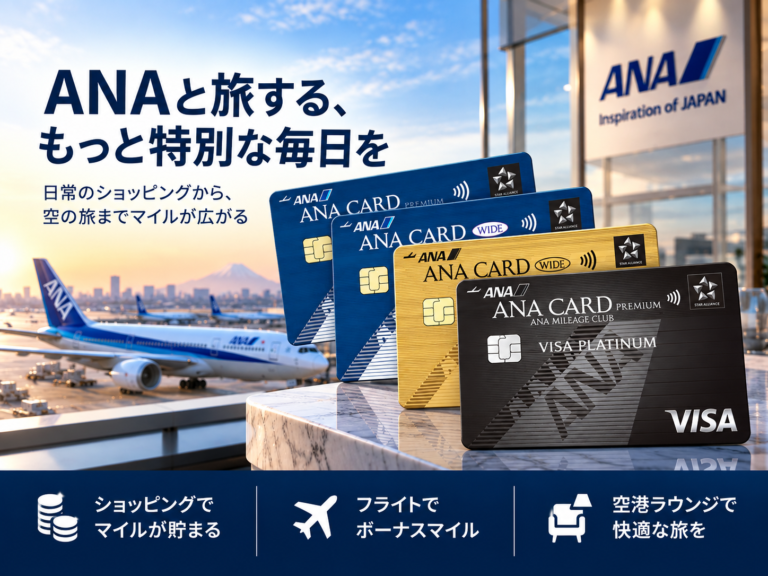
The Japanese ANA Visa / Mastercard lineup includes Standard, Wide, Wide Gold, and Premium cards.
For existing cardholders, an ANA Visa / Mastercard Standard card can be changed to the standard SFC tier after meeting the SFC eligibility requirements and completing the application process.
You do not have to obtain a Wide card first simply to apply for standard SFC.
See the ANA Visa / Mastercard Complete Guide for the differences in annual fees, mileage earning, and card tiers.
ANA American Express — Three Card Options
American Express Japan issues three personal ANA cards:
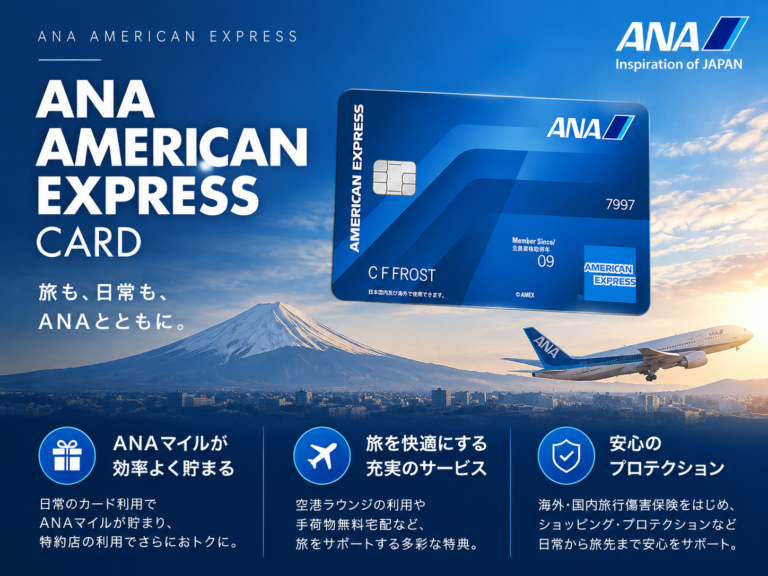
- ANA American Express Card — The entry-level ANA Amex. Eligible members can apply for an SFC Gold card because there is no standard-tier ANA Amex SFC.
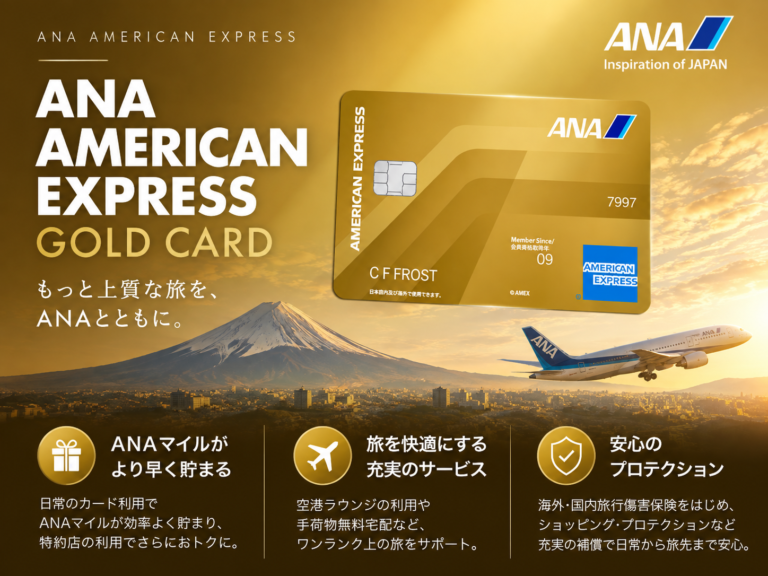
- ANA American Express Gold Card — The mid-tier option, with an ANA Amex SFC Gold counterpart.
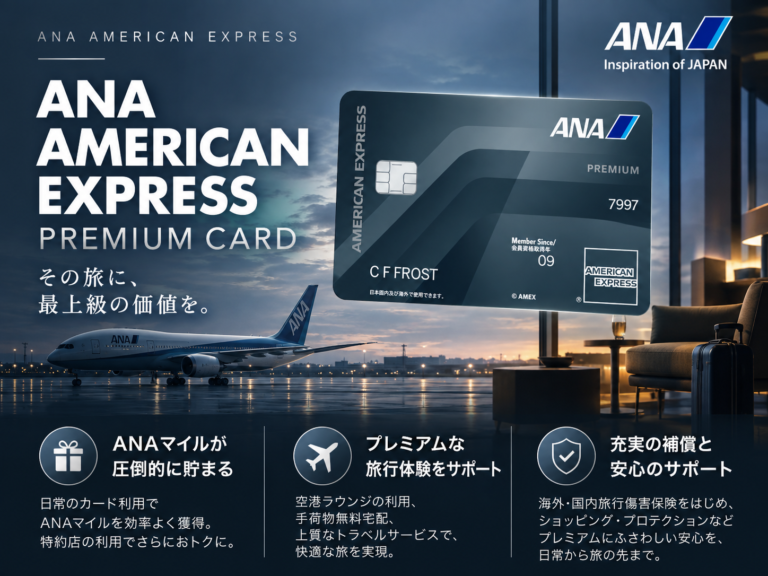
- ANA American Express Premium Card — The premium option, with an ANA Amex SFC Premium counterpart.
ANA American Express does not issue a standard-tier Super Flyers Card.
Therefore, someone holding the basic ANA American Express Card would need to apply for an eligible Gold or Premium SFC product after qualifying.
Approval is not automatic.
ANA JCB Cards
ANA JCB offers Standard, Gold, and Premium Super Flyers Cards.
This gives qualified members several options for balancing annual fees, mileage earning, and card benefits.
ANA Diners Club Cards
ANA Diners Club offers regular Diners and Premium SFC products.
These are generally better suited to travelers who already value the Diners Club card ecosystem.
What About U.S.-Issued Credit Cards?
An American Express Platinum Card or another U.S.-issued travel credit card is not a substitute for a Japanese ANA Super Flyers Card.
U.S. credit card rewards can still be useful for accumulating redeemable airline miles, but they do not replace SFC eligibility or the Japanese credit card application.
Likewise, a U.S.-issued ANA co-branded card does not automatically qualify as a Japanese SFC card.
📝 How to Apply for ANA SFC as an American Living in Japan
ANA SFC applications require more than airline elite status.
Japan-Based Application Requirements
ANA states that applicants need a Japanese financial institution account and a Japanese mailing address.
The application is also subject to the credit card issuer’s screening.
For an American living in Japan, the practical considerations are:
- An eligible ANA Platinum, Diamond, or Million Miler qualification.
- A valid Japanese address.
- An account at a financial institution in Japan.
- Eligibility under the chosen Japanese card issuer’s rules.
- Successful credit card approval.
Japanese citizenship is not a general requirement for ANA SFC. The important distinction is meeting the Japanese application and financial requirements.
Application Process
- Earn ANA Platinum or Diamond status, or meet the qualifying Lifetime Miles requirement.
- Confirm your Japanese address and banking eligibility.
- Choose an eligible SFC card.
- Request the application through ANA’s designated process.
- Complete the card issuer’s screening and enrollment.
Applications and card changes are handled through ANA and the participating issuers.
For official card types and enrollment instructions, visit the ANA Super Flyers Card website.
Can You Cancel Your SFC Credit Card Later?
SFC membership depends on maintaining an eligible Super Flyers Card.
Do not cancel your existing SFC card before confirming the correct switching procedure if you intend to change issuers or card tiers.
Canceling the card can affect your SFC membership.
⚠️ Before Your SFC Run: Credit Card Switching and Approval Risks
Qualifying for ANA Platinum or Diamond status does not automatically guarantee approval for a Super Flyers Card (SFC). Your existing ANA credit card tier and the issuer’s approval process also matter.
A common strategy among experienced SFC runners in Japan is to obtain an ANA credit card that corresponds to your intended SFC tier before starting your status run. This helps avoid the need for a credit card upgrade after completing the qualification requirements.
| ANA Card Held Before Your SFC Run | Target SFC | Switching and Approval Considerations |
|---|---|---|
| ANA Visa / Mastercard (Standard) | SFC Standard | May require a new credit review |
| ANA Visa / Mastercard Wide | SFC Standard | Corresponding tier; traditionally treated as not requiring a new credit review |
| ANA Visa / Mastercard Wide Gold | SFC Gold | Corresponding tier |
| ANA Visa Platinum Premium | SFC Premium | Corresponding tier |
| ANA Amex (Standard) | SFC Gold | Upgrade to a higher tier; credit review required |
| ANA Amex Gold | SFC Gold | Corresponding tier |
These pairings reflect common SFC strategies and historical applicant experiences in Japan. A switch traditionally considered exempt from a new credit review is not a current guarantee from the card issuer.
Why Apply for a Wide or Gold Card Before Your SFC Run?
ANA Visa / Mastercard Wide has traditionally been a popular choice for travelers planning to obtain SFC Standard.
If your goal is SFC Gold, obtaining ANA Wide Gold before your status run can be a more practical approach. American Express users can similarly consider ANA Amex Gold.
This allows you to apply for the corresponding SFC after qualifying, without simultaneously requesting an upgrade to a higher credit card tier.
The recommended approach is to decide whether you want SFC Standard, Gold, or Premium first, then obtain the corresponding ANA credit card before starting your SFC run.
However, switching between corresponding tiers does not guarantee exemption from credit screening. The final application process and approval requirements depend on the issuer’s rules at the time.
🔄 2028 Changes: SFC PLUS vs. SFC LITE
ANA has announced that the revised SFC system will begin on April 1, 2028.
Under the new structure, annual eligible spending on Japanese ANA Cards and ANA Pay determines whether a member receives SFC PLUS or SFC LITE benefits.
SFC PLUS vs. SFC LITE
| Benefit | SFC PLUS | SFC LITE |
|---|---|---|
| Annual eligible spending | At least ¥3,000,000 | Below ¥3,000,000 |
| Star Alliance status | Gold | Silver |
| Star Alliance Gold lounge benefits | Yes | No |
| ANA international lounge access | Retained | Limited designated ANA lounges |
| ANA domestic lounge access | Retained | Available outside restricted peak periods |
| Priority check-in | Retained | Retained |
| Priority baggage handling | Retained | Retained |
| Additional annual ANA miles | 5,000 miles when eligible | Not included |
ANA revised its original announcement in September 2026, restoring certain lounge benefits for SFC LITE.
Does SFC LITE Still Include ANA Lounge Access?
Yes, but it is more restricted than SFC PLUS.
For eligible ANA Group-operated international flights, SFC LITE includes access to designated ANA lounges at Haneda, Narita, and Honolulu.
For domestic ANA flights, lounge access is available outside designated peak periods and times.
ANA has also announced a reservation arrangement for SFC LITE domestic lounge access, with further implementation details to follow.
SFC LITE lounge access should not be confused with Star Alliance Gold lounge privileges across partner airlines.
What Happens to SFC Family Card Benefits in 2028?
Beginning in April 2028, ANA will introduce the SFC PLUS and SFC LITE membership structure. These changes will also affect SFC family cardholders.
If the primary cardholder qualifies for SFC PLUS, eligible family cardholders can receive the corresponding PLUS benefits, including Star Alliance Gold.
However, if the primary cardholder falls under SFC LITE, family cardholders will no longer automatically receive the full Star Alliance Gold benefits available under the current SFC system.
For families who want to maintain Star Alliance Gold over the long term, the key question is whether the primary cardholder can consistently meet the SFC PLUS requirements.
Eligible spending on family cards can also count toward the primary cardholder’s annual qualifying spending total. Combining everyday household purchases may help meet the SFC PLUS spending threshold.
Can Family Card Spending Count Toward ¥3 Million?
Eligible spending on the primary ANA Card and qualifying family cards can be combined under ANA’s rules.
For example:
| Spending source | Annual eligible spending |
|---|---|
| Primary ANA Card | ¥1,800,000 |
| Family ANA Card | ¥1,200,000 |
| Total | ¥3,000,000 |
Eligible spending across qualifying ANA Cards linked under the applicable ANA Mileage Club arrangements may also count.
However, ANA Card charges to ANA Pay are not themselves eligible spending. Subsequent qualifying ANA Pay payments must not be double-counted.
Do U.S. Credit Card Purchases Count?
No. U.S.-issued credit cards are not eligible Japanese ANA Cards for the SFC PLUS spending calculation.
For Americans living in Japan, this creates an important trade-off.
Spending ¥3 million on a Japanese ANA Card to maintain SFC PLUS may mean putting less spending on U.S. cards such as Amex Gold, Chase Sapphire Reserve, or Capital One Venture X.
The correct decision depends on how much you value Star Alliance Gold compared with the rewards you could earn from your existing U.S. cards.
You should not automatically move all spending to a Japanese ANA Card without evaluating that opportunity cost.
When Does the First Spending Period Begin?
The first assessment period runs from:
December 16, 2026, through December 15, 2027.
The revised SFC system takes effect on April 1, 2028.
For newly enrolled members, ANA applies the assessment period covering the enrollment date, according to its published rules.
Is There a Million Miler Exception?
Eligible SFC members with 1 million Lifetime Miles on ANA Group-operated flights can receive SFC PLUS under ANA’s special provisions.
The additional annual 5,000-mile benefit still has its own eligible-spending requirement.
👤 Who Should Pursue ANA SFC After 2028?
| Traveler profile | Practical recommendation |
|---|---|
| American living in Japan who frequently flies ANA | Use existing flights toward qualification |
| Frequent United / EVA / Singapore Airlines traveler | Evaluate long-term Star Alliance Gold benefits |
| Japan resident naturally spending ¥3 million on eligible ANA products | SFC PLUS may remain attractive |
| Traveler mostly flying ANA domestic routes | Consider whether SFC LITE is sufficient |
| American living in the U.S. without Japanese card eligibility | Do not pursue SFC without confirming application eligibility |
| Traveler needing expensive dedicated mileage runs | Compare qualification cost against expected benefit value |
For a Japan-based traveler already flying ANA regularly, the incremental cost of qualifying for SFC can be relatively manageable.
For someone who rarely flies ANA and would need to spend hundreds of thousands of yen on additional tickets, the economics are very different.
The 2028 changes make this distinction even more important.
🏁 Final Thoughts: Check Eligibility Before Calculating SFC Mileage Run Costs
The goal of an ANA SFC mileage run is not simply to earn 50,000 Premium Points. It is to obtain airline benefits that justify the total qualification cost.
One important advantage is that eligible family members can obtain SFC membership through family cards without completing their own mileage runs.
Before starting an SFC mileage run, consider four questions:
- Application eligibility: Do you have a Japanese address, meet the banking requirements, and qualify for an eligible Japanese SFC credit card?
- Qualification cost: Which combination of Simple, Standard, and Flex fares offers the lowest total airfare to reach 50,000 Premium Points?
- Family card benefits: Could eligible family members benefit from SFC membership without completing separate mileage runs?
- Long-term benefits: Can you naturally meet the ¥3 million annual eligible spending requirement to maintain SFC PLUS beginning in 2028?
If you already live in Japan, frequently fly ANA, and can meet the annual spending threshold through normal purchases, SFC PLUS may remain a valuable long-term option, especially for families who want Star Alliance Gold benefits.
However, if your primary goal is Star Alliance Gold and you cannot consistently meet the SFC PLUS requirements, you should reconsider whether the qualification cost is worthwhile. The 2028 changes also affect family cardholders, so SFC family cards should not be treated as a permanent guarantee of Star Alliance Gold.
Confirm your eligibility for a Japanese SFC credit card first, calculate the actual airfare needed to earn 50,000 Premium Points, and evaluate both family card benefits and long-term spending requirements before committing to a mileage run.